

Ready-to-Eat vs. Meal Kits: Which Meal Delivery Service Best Fits Your Lifestyle?
Compare fully cooked prepared meals against cook-at-home meal kits across weekly prep time, ingredient freshness, pricing per serving, and kitchen cleanup.
Deciding between prepared meals and cook-at-home recipe kits is the single most frequent decision consumers face when subscribing to a meal delivery platform. Both models promise to simplify weeknight eating, but they solve very different problems, and choosing the wrong one can turn a convenience purchase into a frustrating weekly obligation. Understanding the core difference between a fully cooked ready-to-eat meal and a raw ingredient meal kit is the foundation of every good subscription decision, and it shapes everything from your weekly grocery budget to the amount of time you spend standing at the kitchen sink.
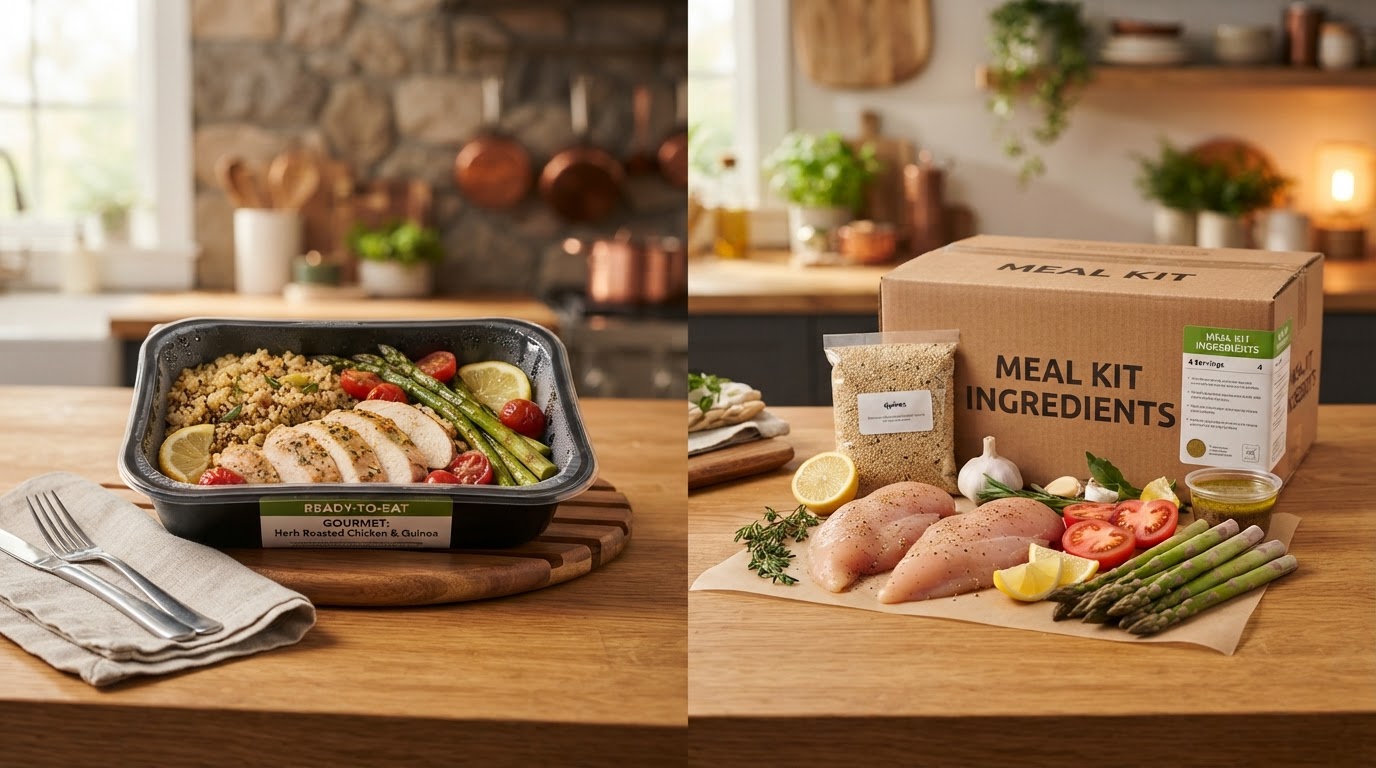
Prepared and ready-to-eat meal deliveries arrive fully cooked and either chilled or flash-frozen. They require zero knife work, zero pans, and usually heat in two to three minutes in the microwave or ten minutes in a standard convection oven. For professionals who arrive home after a long shift, parents managing multiple children's schedules, or anyone whose idea of cooking is pressing a button, prepared meals eliminate every friction point between hungry and fed. The tradeoff is that you never touch a knife, never build any cooking skill, and pay a premium for the labor someone else performed in a commercial kitchen hundreds of miles away.
Meal kits provide portioned raw proteins, fresh vegetables, spice blends, and step-by-step full-color recipe cards. While meal kits take fifteen to forty minutes of active prep, they allow you to master culinary techniques, practice knife skills, tweak seasonings to taste, and genuinely participate in the cooking process. Many subscribers find the act of cooking therapeutic after a screen-heavy workday, and meal kits preserve that ritual while removing the planning and shopping that make cooking from scratch feel like a chore. The downside is real cleanup, longer evenings in the kitchen, and the need to be present for the duration of the recipe.
When evaluating total cost per portion, prepared single-serve meals typically range from $11 to $15 per serving, whereas family-oriented meal kit boxes often hover between $8 and $12 per portion. The per-serving gap reflects the labor and individual packaging baked into prepared meals. However, cost is only one variable. Households that routinely discard spoiled groceries may find prepared meals genuinely economical once waste is eliminated, while households that already cook efficiently may find meal kits an expensive upgrade over their existing routine.
Shelf life and storage differ meaningfully. Fresh prepared meals generally last four to seven days refrigerated and must be consumed in order of perishability, demanding some schedule management. Flash-frozen prepared meals can store for three to six months, offering maximum flexibility for unpredictable weeks. Meal kits arrive with raw ingredients that must be cooked within a few days of delivery, locking you into a cooking window that can clash with late meetings or unexpected social plans.
Dietary accommodation differs too. Prepared meal services increasingly specialize in high-protein, keto, gluten-free, plant-based, low-sodium, and medically tailored menus, with verified nutritional labels printed on every container. Meal kits offer dietary categories within a broader menu, but because you cook the meal yourself, verifying precise macros or allergen-free cross-contact is harder, and sodium content depends on the seasoning you add rather than a lab-verified label.
Menu fatigue is the silent subscription killer. Even a service with thirty weekly options can feel repetitive over months, and households with narrow dietary needs may see their viable menu shrink to a handful of rotating items. Meal kits tend to combat fatigue better because the act of cooking varies even when the underlying ingredient list is familiar, while prepared meals can feel assembly-line after the novelty wears off. Sampling several services and rotating between a prepared-meal subscription and a meal-kit subscription is a common strategy for long-term satisfaction.
Cleanup is the final practical consideration. Prepared meals generate one container per serving and no cookware, making them ideal for households where dishwashing is a friction point. Meal kits dirty cutting boards, knives, pots, and pans, adding cleanup time that can negate the convenience of delivery for time-pressed evenings. Some meal kit services now offer oven-ready or one-pan recipes that reduce dishes, blurring the cleanup advantage of prepared meals.
This directory indexes both prepared meal and meal kit providers across the United States and Canada, organized by service type, dietary specialization, and service area. Browse company profiles to compare menus, pricing, packaging, and delivery logistics, then contact providers directly through their listed website, phone, or email to request current menus and trial offers. Whether you ultimately choose ready-to-eat convenience or the hands-on ritual of a meal kit, matching the model to your actual lifestyle rather than to marketing promises is the difference between a subscription you keep and one you cancel in week three.
Looking for prepared & ready-to-eat meals providers?
Browse our directory of vetted meal delivery services.
Browse Ready-to-Eat Meals