
Flash-Frozen vs. Fresh Refrigerated Meals: Shelf Life, Texture & Nutrient Retention
Understand how blast-chilling and cryogenic flash-freezing safeguard delicate vitamins, crisp vegetable textures, and natural sauces without synthetic preservatives.
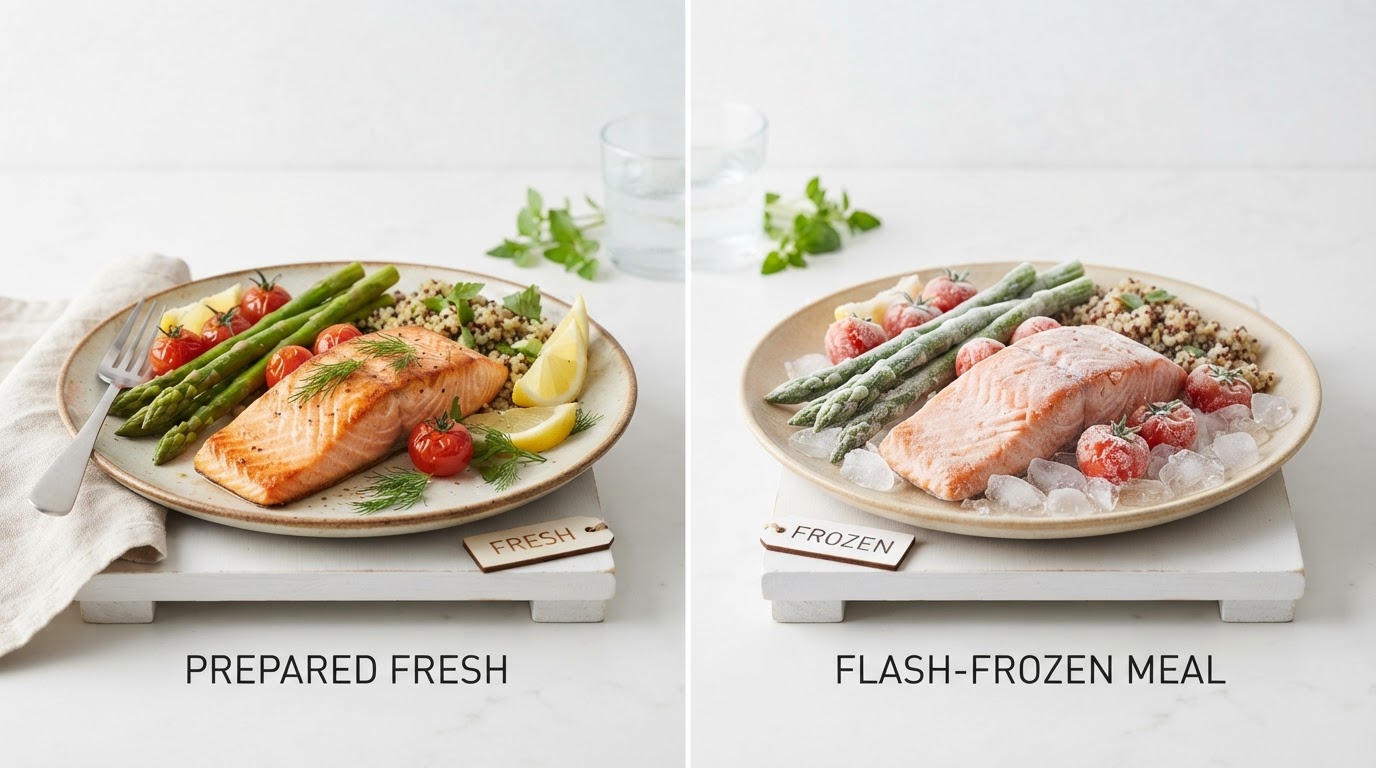
Modern flash-freezing technology operates at sub-zero temperatures with rapid industrial airflow, preventing the jagged ice crystals that rupture plant cell walls and protein fibers during slow freezing. When water freezes slowly, large crystals form and puncture the membranes that keep vegetables crisp and proteins tender. Flash-freezing, by contrast, freezes water so rapidly that crystals remain microscopic, preserving the cellular structure that determines mouthfeel. This technical difference is why a professionally flash-frozen meal can reheat with texture closer to fresh than to the mushy, waterlogged results of a home freezer.
Fresh refrigerated meals deliver farm-to-table immediacy that many customers prize, but they come with a demanding shelf life. Generally, fresh prepared meals need to be consumed within three to five days of doorstep delivery, and the most perishable items, typically leafy greens and delicate seafood, should be eaten first. This creates a daily decision matrix: which meal tonight, which can wait until Thursday, and which must be sacrificed if your week changes. Households with unpredictable schedules may find fresh meals stressful precisely because the clock is always ticking on each container.
Frozen meal subscriptions offer unbeatable flexibility for unpredictable schedules, allowing you to store meals safely for three to six months without quality degradation. A freezer full of flash-frozen dinners means a late meeting, a surprise dinner invitation, or a sick child never forces you to discard spoiled food or order takeout. The tradeoff is that frozen meals require planning ahead by thawing overnight in the refrigerator or accepting extended reheating time, and not all meals freeze equally well, with creamy sauces and crisp vegetables showing the most texture change after freezing.
Nutrient retention is where the fresh-versus-frozen debate gets genuinely interesting. Fresh produce begins losing certain vitamins, particularly vitamin C and some B vitamins, the moment it is harvested, and days of transport and refrigeration compound these losses before the meal reaches your refrigerator. Flash-frozen vegetables and fruits, by contrast, are frozen within hours of harvest, locking in nutrients at near-peak levels. For some vitamins, frozen meals can be nutritionally superior to fresh meals that spent a week in transit, a counterintuitive finding worth weighing against the premium many associate with the word fresh.
Always inspect provider packaging seals and insulated ice packs upon delivery to confirm safe cold-chain transit temperatures under 40 degrees Fahrenheit. If cold packs arrive melted, containers feel warm to the touch, or seals appear broken, contact the provider immediately for replacement rather than consuming potentially unsafe food. Cold-chain integrity is the single most important food safety factor in meal delivery, and reputable services use robust insulation and sufficient refrigerant to maintain safe temperatures even during summer transit delays that can stretch delivery windows beyond the promised schedule.
Texture differences matter more for some foods than others. Lean proteins like chicken breast and white fish freeze and reheat well, retaining moisture when reheated gently. Red meats can develop a slightly grainier texture after freezing, and dishes with dairy-based sauces may separate or become grainy. Starchy vegetables like potatoes can become mealy after freezing, while firm vegetables like broccoli and green beans hold their texture better than delicate greens. Understanding which meals your provider freezes well, and which are best shipped fresh, helps you build a weekly order that plays to each format's strengths.
Sodium and preservative considerations also differ between fresh and frozen. Fresh meals, with their short shelf life, can rely on refrigeration alone for safety and often contain fewer added preservatives. Frozen meals may include stabilizers or slightly higher sodium to maintain quality through freezing and reheating, though premium frozen services increasingly minimize additives. Reading ingredient labels and asking providers about their preservation methods reveals whether a frozen meal's convenience comes at a nutritional cost you find acceptable.
Reheating technique determines how much of the original quality survives to your plate. Frozen meals heated from frozen benefit from lower microwave power and longer times to heat evenly without drying edges. Fresh meals reheat quickly but can overcook in the microwave, so covering with a damp paper towel and stirring midway produces more even results. Following each provider's specific reheating instructions, rather than defaulting to a single method, is the difference between a meal that tastes freshly made and one that feels like a compromise.
This directory lists both fresh and frozen prepared meal providers across the United States and Canada, with profiles detailing shelf life, packaging, and delivery logistics. Compare providers by your actual schedule and storage capacity, then contact companies directly through their listed website, phone, or email to confirm current menus and request sample orders. Choosing between fresh and frozen is less about which is objectively better and more about which fits the rhythm of your week, the capacity of your refrigerator and freezer, and the meals you genuinely look forward to eating.
Looking for prepared & ready-to-eat meals providers?
Browse our directory of vetted meal delivery services.
Browse Ready-to-Eat Meals